The Yellow Transaxle: A Japanese-Market Porsche 968 Club Sport
A driver-focused 968 Club Sport, photographed indoors in Speed Yellow.
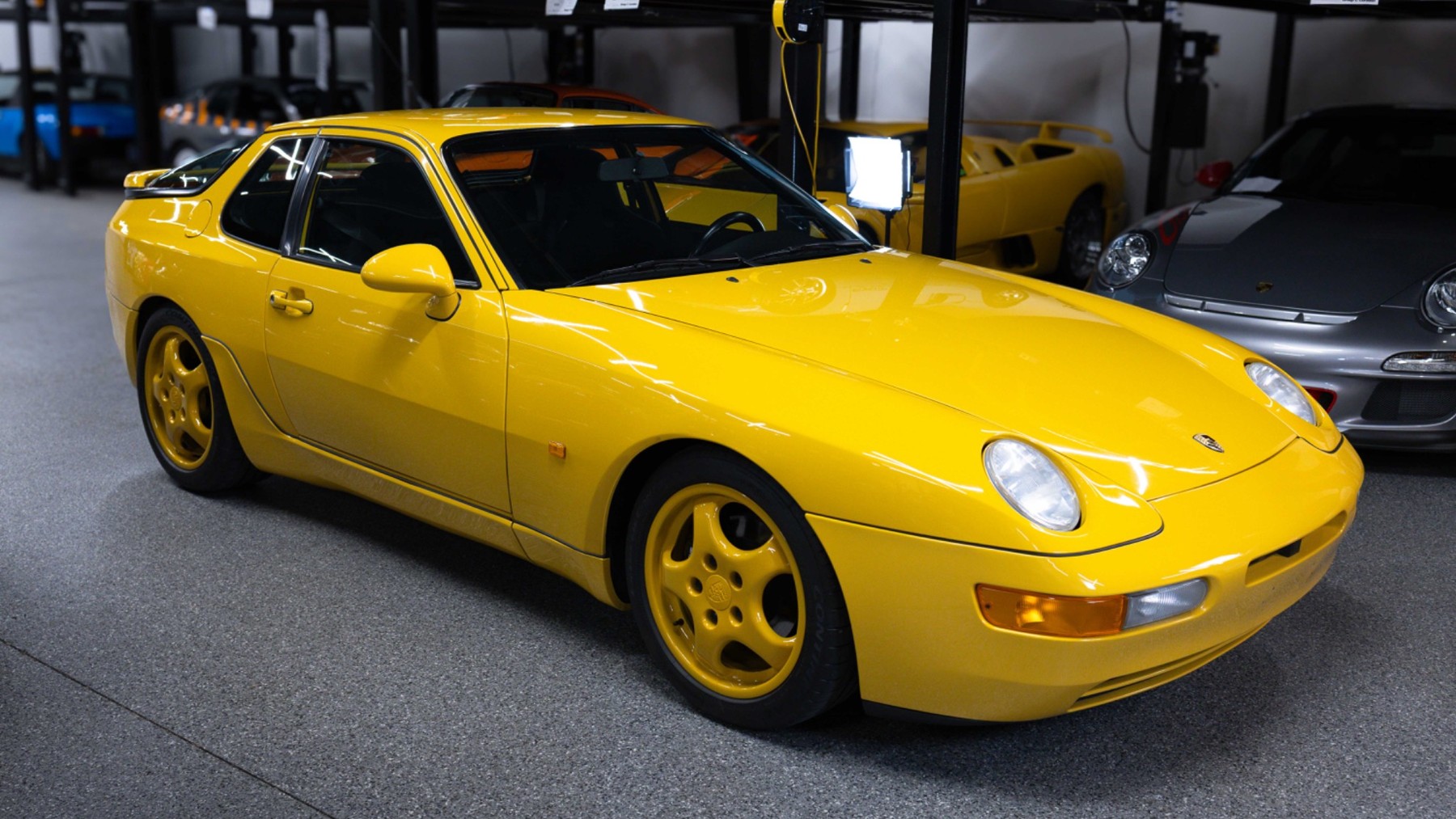
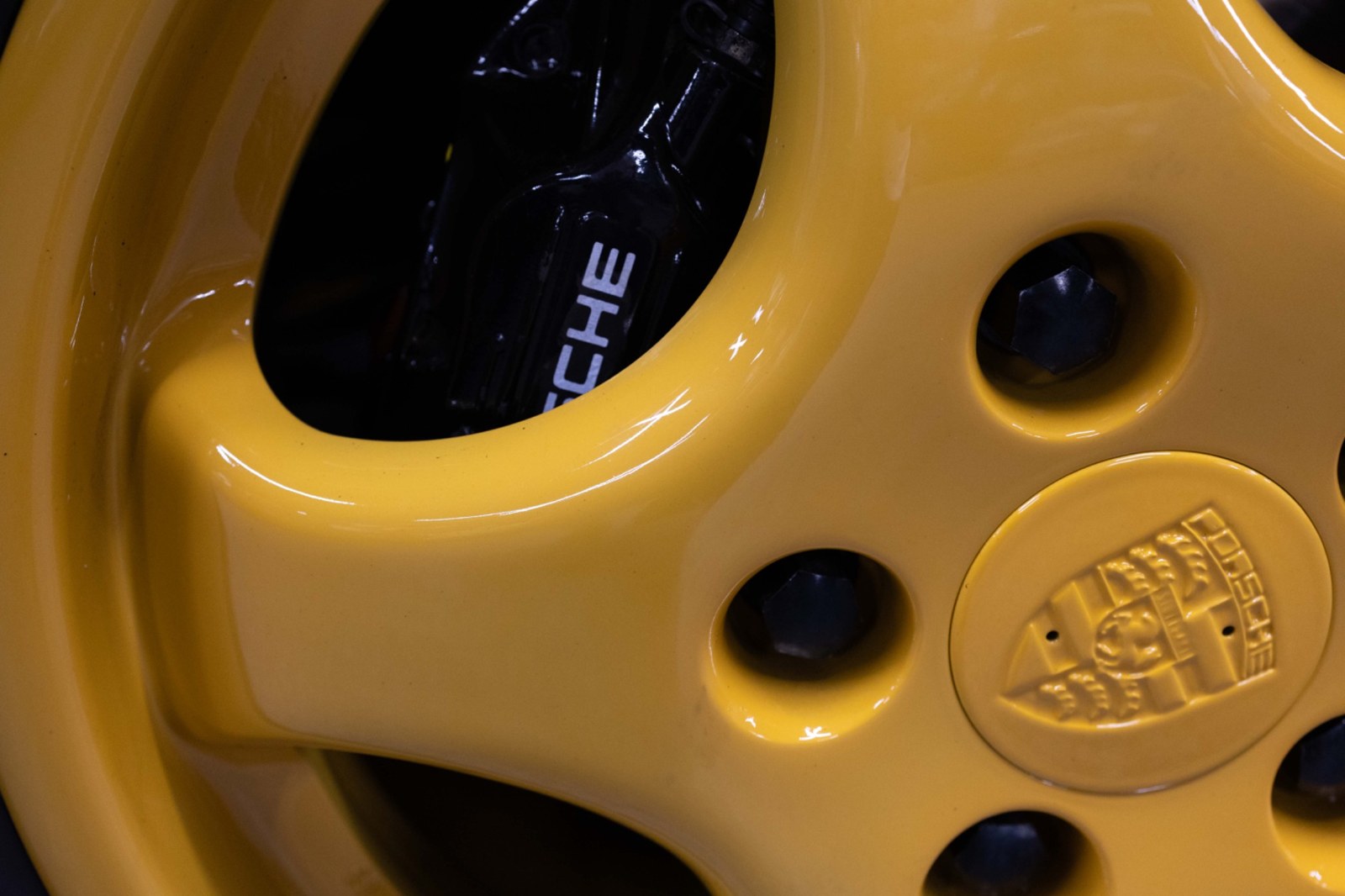
There is a particular kind of Porsche that does not announce itself all at once. It does not flare its hips like a Turbo, does not wear a whale tail, and does not rely on the silhouette that has carried the 911 through six decades of cultural memory. Instead, it sits low, narrow, and almost deceptively simple. Then the details begin to speak: the color-coded bucket seats, the painted Cup wheels, the deleted rear seat, the 968 CS badge, the lack of unnecessary ornament. This Speed Yellow Porsche 968 Club Sport is one of those cars.
To understand the 968 Club Sport, it helps to remember where Porsche was in the early 1990s. The company’s front-engine transaxle line had evolved from the 924 through the 944 and finally into the 968. By then, the formula had been refined to near perfection: engine in front, gearbox at the rear, excellent balance, clean steering, and a chassis that rewarded precision more than aggression. The 968 was the final expression of that architecture before Porsche turned the page. [1]
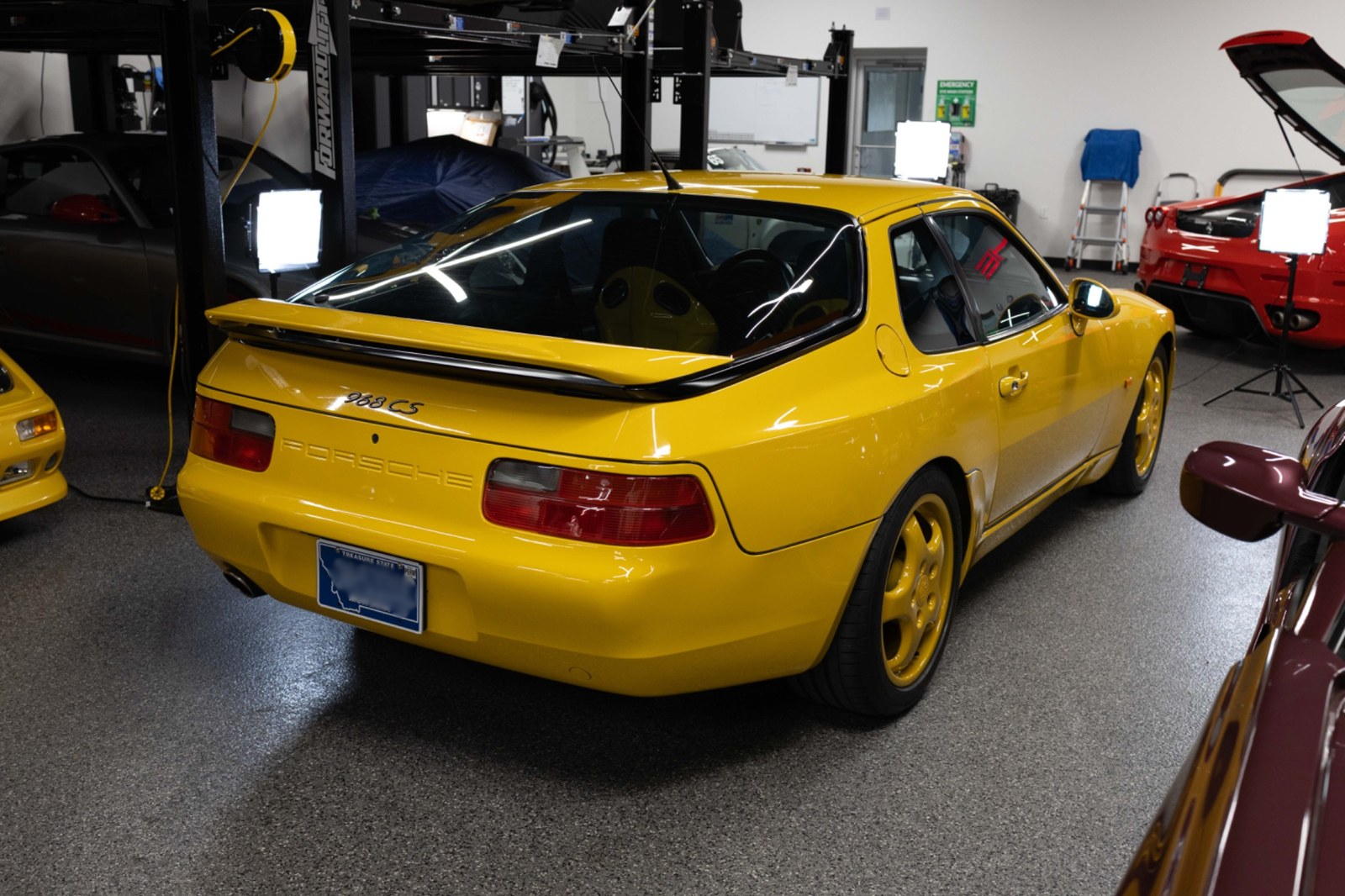
The Club Sport was the 968 reduced to its essential purpose. Porsche unveiled the model in October 1992 at the Paris Motor Show, and it went on sale for the 1993 model year. It was produced through 1995, making it a brief, focused chapter in the history of Porsche’s transaxle cars. [2] The recipe was simple but effective: reduce weight, sharpen the chassis, and remove equipment that did not serve the driver.
That meant deleting many of the comforts found in a standard 968. Rear seats were removed. Sound insulation was reduced. Lightweight bucket seats replaced heavier comfort seats. Electric accessories could be omitted. The result was not a luxury coupe with sporting pretensions, but a purer, more direct car intended for drivers who understood why less could be more. [3]
This example adds another layer of interest: it is a Japanese-market car. The 968 Club Sport was not officially sold new in the United States, so any example seen here already has an element of scarcity. A Japanese-market car in Speed Yellow, with the color-matched Club Sport interior, feels more special still. Japan has long had a serious enthusiast culture around European performance cars, and Japanese-market Porsches often carry details and provenance that make them especially interesting to American collectors. [4]
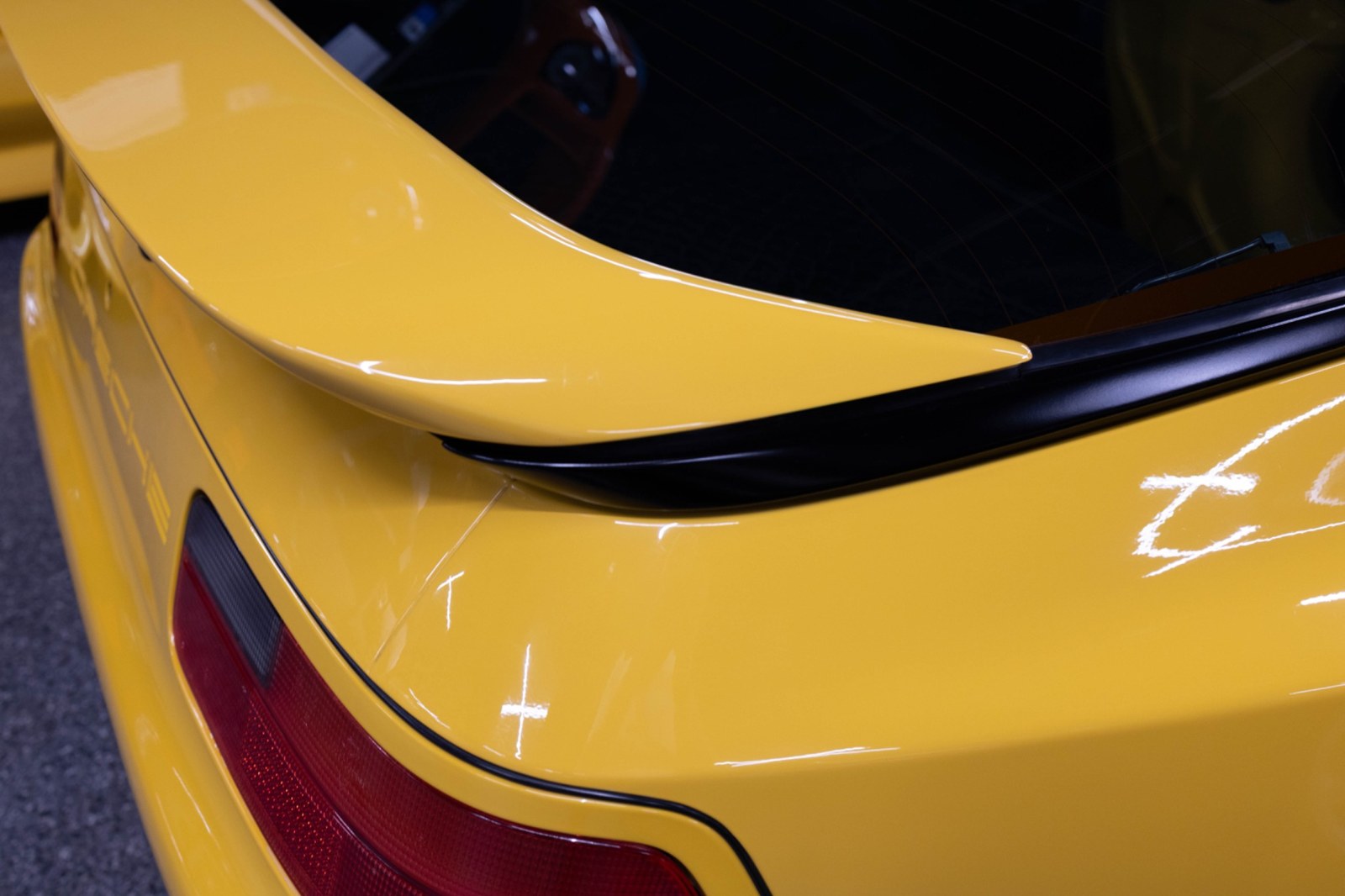
The color does much of the talking. Speed Yellow is not subtle, but on the 968 it does not feel excessive. The car’s clean sides, rounded nose, flush glass, and sloping hatch give the color room to work. On a 911, yellow can sometimes become part of the car’s attitude. On the 968, it emphasizes the purity of the shape. The body is not aggressive in the modern sense. It is compact, balanced, and almost architectural. The yellow simply draws attention to the form that was already there.
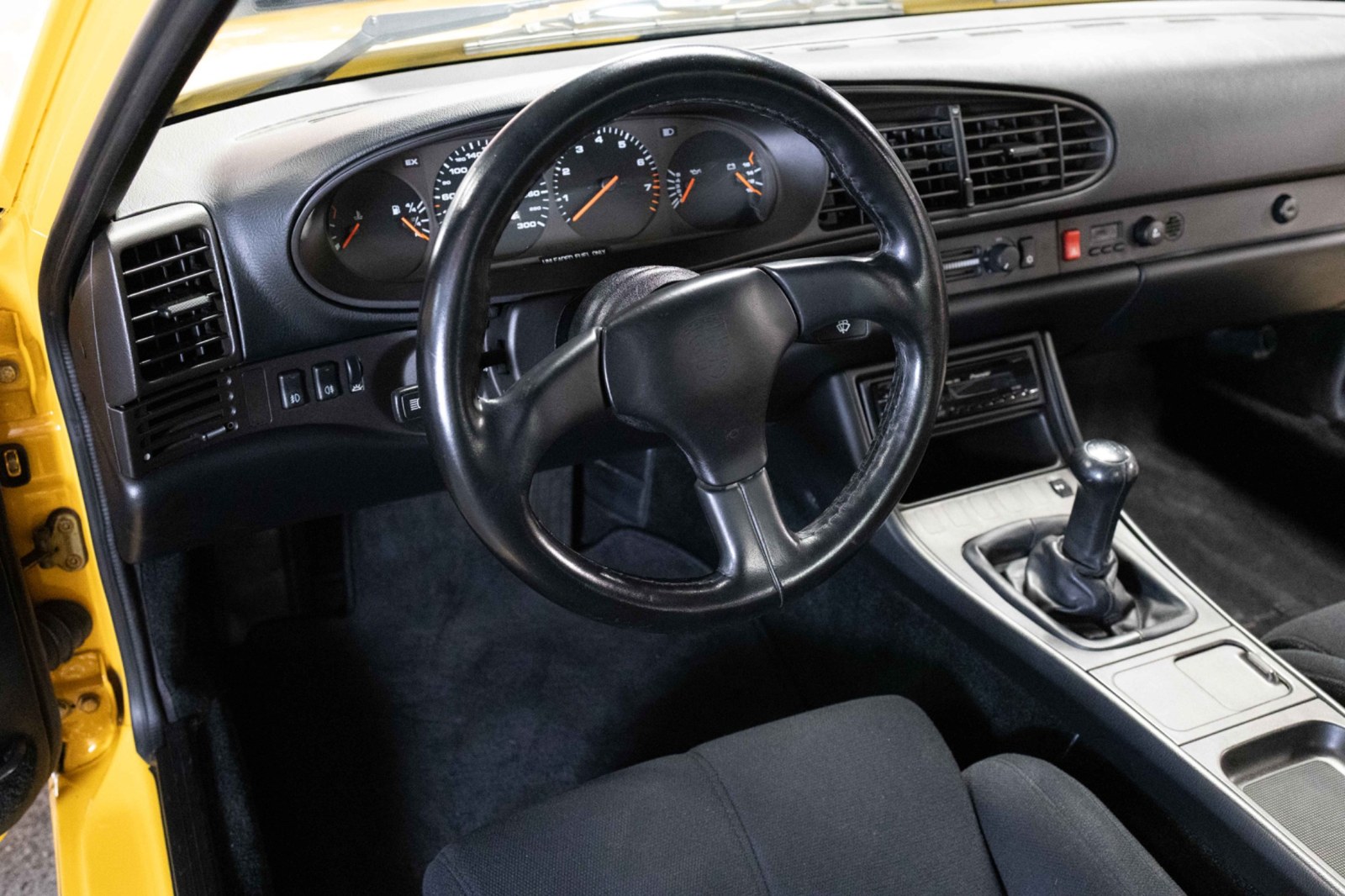
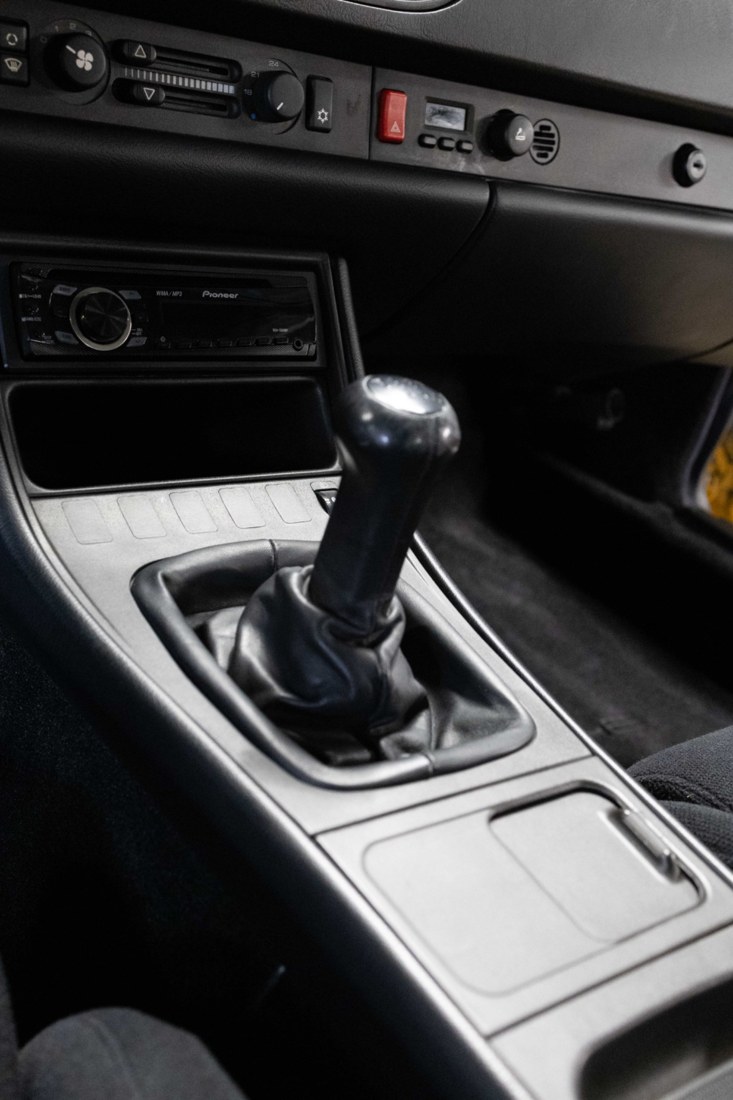
Inside, the Club Sport character is even clearer. The yellow-backed seats dominate the cabin visually, turning what might otherwise be a simple black interior into something unmistakably motorsport-inspired. The dashboard is typical Porsche of the period: logical in some ways, idiosyncratic in others, with the kind of low cowl and intimate driving position that modern cars have largely abandoned. The shifter sits high enough to feel important. The steering wheel is simple. The cabin does not attempt to entertain passengers; it is arranged around the driver.
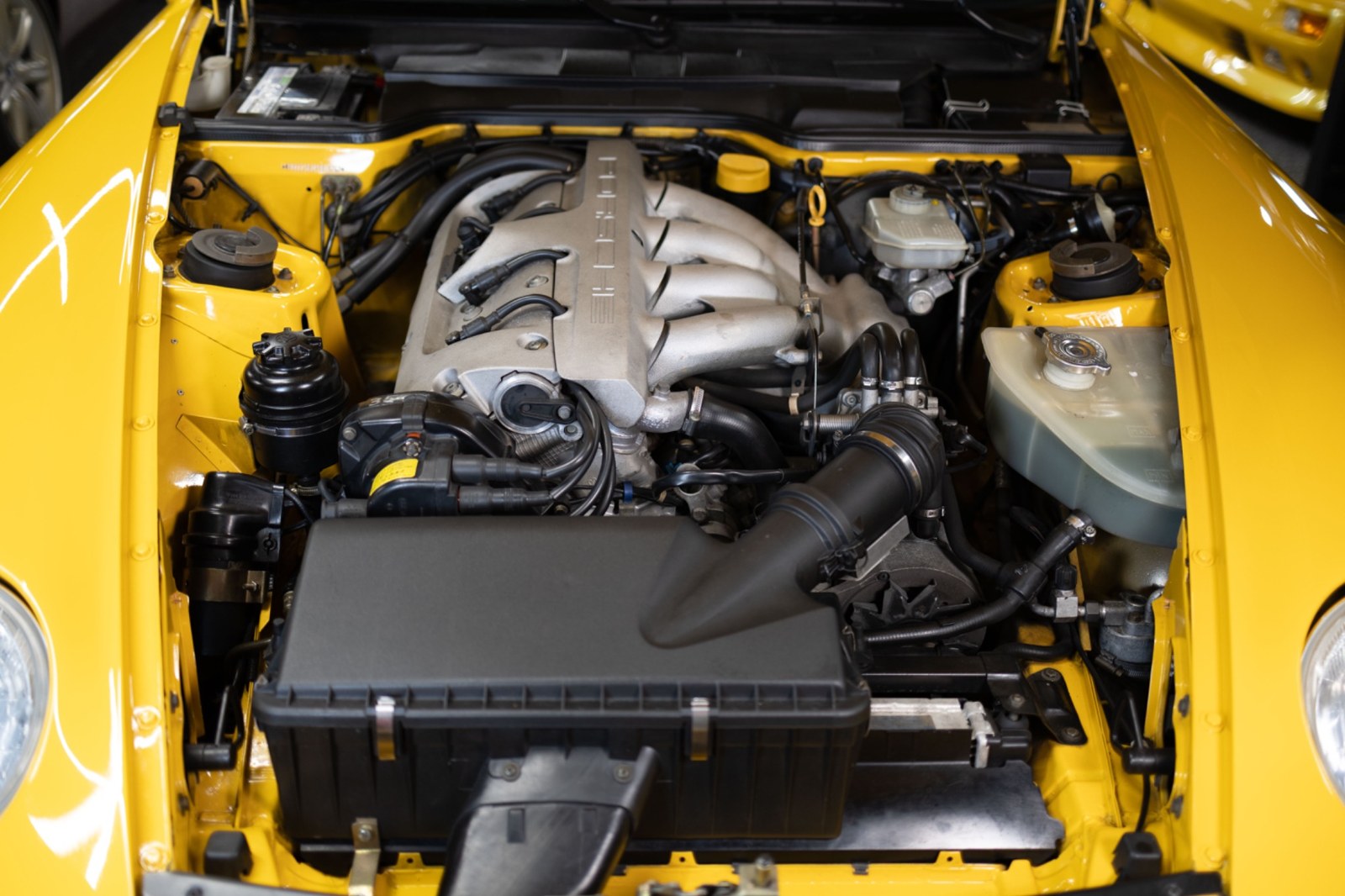
That is the point of the Club Sport. It was not built to be the most luxurious 968, nor the fastest Porsche of its day. It was built to feel right. The 3.0-liter four-cylinder engine, equipped with Porsche’s VarioCam variable valve timing, is a defining part of the 968 experience. In European specification, the engine produced about 240 horsepower, a healthy figure for a naturally aspirated four-cylinder of the period. [5] It does not have the sound or mythology of a flat-six, but it suits the car’s personality. The 968 is about balance, clarity, and response.
In an era when many performance cars chased horsepower, the Club Sport chased connection. The transaxle layout gave the car excellent weight distribution. The steering was communicative. The brakes were strong. The chassis had the kind of neutrality that made it approachable on the road and satisfying on track. Contemporary testers understood what Porsche had done. The 968 Club Sport earned a reputation as one of the great driver’s cars of its era, including recognition from British performance magazines for its handling and overall capability. [6]
Production figures have always been part of the 968 Club Sport conversation, and they are not as simple as they first appear. One commonly cited total is 1,923 Club Sports built from 1993 through 1995: 856 in 1993, 536 in 1994, and 531 in 1995. However, registry-based figures can differ depending on whether one counts only cars registered as Club Sports, cars built on Club Sport chassis, or related 968 Sport variants. The PCA 968 Register’s published production table also lists Club Sport production across those three model years. [7]
For that reason, the safest way to describe this car is not by claiming a precise color-and-market production number, but by placing it in the correct context. The 968 Club Sport was rare. Speed Yellow was one of the car’s important period colors. Japanese-market Club Sports are especially uncommon in the United States. Exact public counts for Japanese-market 968 Club Sports, and specifically for Speed Yellow Japanese-market Club Sports, are difficult to verify without factory documentation, registry confirmation, or a Porsche certificate. [8]
What makes this particular car compelling is not simply that it is rare. Rarity alone is never enough. The appeal is that every part of the car reinforces the same idea. The color, the seats, the wheels, the deleted excess, the manual gearbox, the naturally aspirated engine, and the transaxle layout all point in the same direction. This was Porsche building a car for drivers at a time when the company could not afford indulgence. In that constraint, it found clarity.
Photographed indoors, the car takes on a slightly secretive quality. The Speed Yellow paint reflects the shop lights, the rear glass catches the shapes of the room, and the black interior recedes into shadow. It does not look like a museum object. It looks like a machine waiting for use. That matters. A Club Sport should not feel over-restored or ornamental. It should feel ready.
The 968 Club Sport occupies a fascinating place in Porsche history. It is not the best-known Porsche, not the most valuable, and not the easiest car to explain to casual enthusiasts. Yet for those who understand the transaxle cars, it represents something close to the peak of the line. It carries the lessons of the 924, 944, and standard 968, then removes enough weight and comfort to sharpen the message.
In Speed Yellow, with Japanese-market provenance, this car becomes more than a rare variant. It is a bright reminder that Porsche’s identity has never belonged solely to the 911. For a brief moment in the 1990s, at the end of the front-engine transaxle era, Porsche built a car that was simple, balanced, useful, and deeply focused. The 968 Club Sport was that car. This one just happens to wear the perfect color, and will soon be offered for sale.
Endnotes
- Sports Car Market, “1993 Porsche 968 Club Sport”; Porsche Classic model overview for the 968. https://www.sportscarmarket.com/profile/1993-porsche-968-club-sport
- Porsche, “A Guide to the Porsche 968 Club Sport”; Rush Magazine, “Buying a Porsche 968 Club Sport.” https://www.porsche.com/stories/innovation/a-guide-to-the-porsche-968-club-sport/
- Stuttcars, “Porsche 968 CS Coupe”; Sports Car Market, “1993 Porsche 968 Club Sport.” https://www.stuttcars.com/porsche-968-cs-coupe/
- Rush Magazine, “Buying a Porsche 968 Club Sport,” noting the markets in which the Club Sport was offered and that it was not officially a North American-market model. https://www.rushmagazine.co.uk/post/buying-a-porsche-968-club-sport-your-comprehensive-guide
- Stuttcars, “Porsche 968 CS Coupe.” https://www.stuttcars.com/porsche-968-cs-coupe/
- Rush Magazine, “Buying a Porsche 968 Club Sport.” https://www.rushmagazine.co.uk/post/buying-a-porsche-968-club-sport-your-comprehensive-guide
- Rush Magazine, “Buying a Porsche 968 Club Sport”; Porsche 968 Register, “968 Production Data.” https://968register.org/production-data/
- Porsche 968 Register, “Speed Yellow 968s”; Porsche 968 Register, “968 Production Data.” https://968register.org/production-data/speed-yellow-968s/